

AI in the Water Industry
In this month’s forum, we wanted to highlight two recent resources around everyone’s favorite topic: Artificial Intelligence! Advances in AI are all over the place, and at Moonshot Missions we are working hard to identify the best strategies, locations, and opportunities to bring artificial intelligence into the water sector. We’ve compiled highlights from a recent report sponsored by WEF and the American Water Works Association, as well as an overview of WEFTEC highlights surrounding artificial intelligence as summarized by the “Talking Under Water” podcast. The two are sorted below:
Summary of “The Role of Generative AI for the Global Water Sector” by WEF and American Water Works Association:
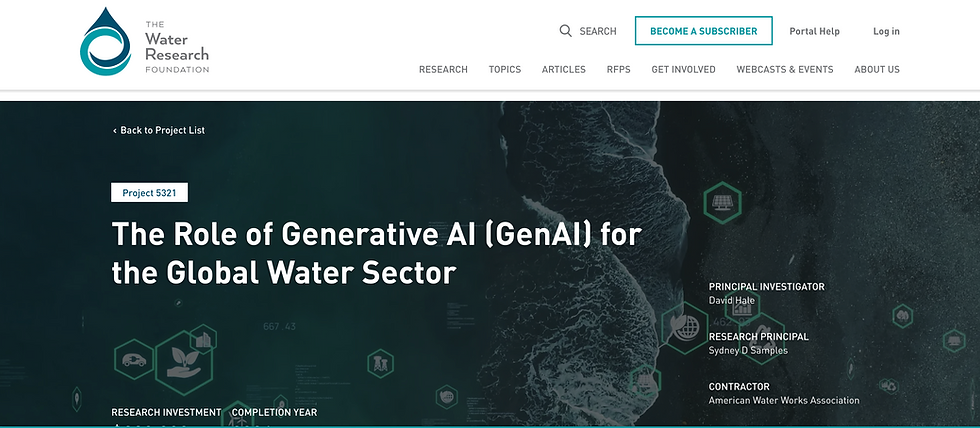
This fascinating report features a compilation of experts (including some facilitation help from Moonshot Missions) talking through both the big picture and the practical application of AI in water utilities. The report focuses on gaining support and value for LLMS, as well as sharing practical strategies. The report is broken up into 4 important components, all worth digging into and revisiting:
This document first argues that the industry needs a set of common definitions for an understanding of AI in the workplace:
The project explores key concepts such as retrieval augmented generation (RAG), Agentic AI, the role of unstructured data, data cleansing and analytics, optical character recognition (OCR), voice applications, and computer vision.
This section also introduces Retrieval Augmented Generation, or RAG, to let LLMs pull from their own repositories before generating answers.
Based on these common definitions, the report identified a series of best practices that the industry should move toward to enact in their workforce. The best practices include:
Position GenAI/LLMs as an assistant, not a replacement, with visible executive sponsorship.
Provide layered training for all roles and create a community of practice.
Put clear policies in place for acceptable use, governance, and data security.
Run small, measurable pilots, share results, and celebrate wins to build confidence, attract and retain talent, and preserve institutional knowledge.
After establishing more of a knowledge base, the report moves into real use cases. They establish these best practices:
Set the basics: clear AI policies, data classification, and use secure, enterprise tools.
From here, they recommend building awareness and suggest plain language training, shared examples, and the creation of a small community of practice.
Start small with pilots that remove repetitive work, track time/cost savings, and share results to build confidence.
Reduce fragmentation by naming a leader and coordinating across departments.
Keep costs low by using affordable licenses or partnerships.
Improve data quality before applying GenAI/LLMs
Engage both technical and non-technical staff so everyone benefits and buys in.
The report also addresses data security, value demonstration, technical and non-technical staff, and budget constraints.
The final part of the report involves a roadmap for moving forward. The layout includes:
Developing Standard Nomenclature for Defining Utility Data
Scaling GenAI Applications through Standardized Building Blocks
Setting the Groundwork for Agentic AI in the Water Sector
Explore next-generation AI agents that support asset monitoring, energy optimization, and emergency response while maintaining strong human oversight.
National-Level Survey and Benchmarking Project
Identifying Change Agents Inside Organizations
Research the leadership models and communication strategies that build internal support and overcome cultural resistance to AI adoption.
AI as a Driver for Regionalization
Along with this, the report concludes with research gaps, a table of use cases, and important appendices in order to enact these capabilities for utilities of all sizes. Take a more careful look at the report here.
“Talking Under Water Podcast” and highlights from WEFTEC:
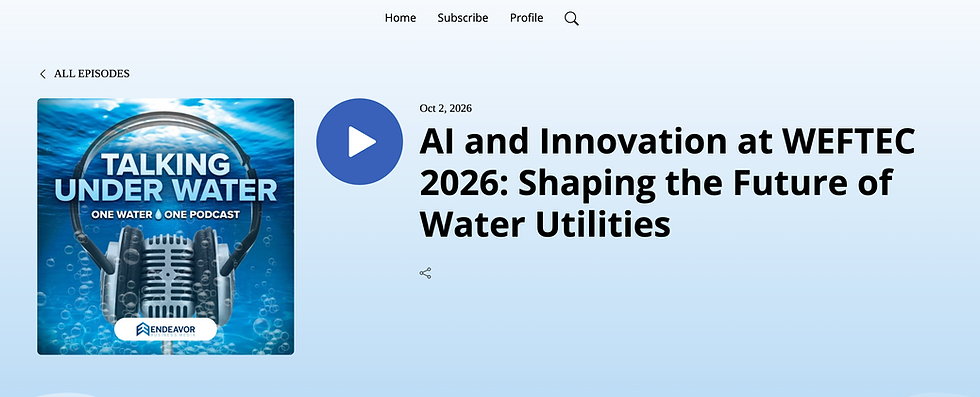
This short podcast offers a broad yet important overview of key takeaways from WEFTEC, namely takeaways that had to do with artificial intelligence in the water sector, cybersecurity preparedness, utility financing, potable reuse, and other innovative technologies as seen on the show floor. The hosts of this podcast share:
An inspiring keynote presentation focused on reframing challenges and embracing new ways of thinking;
Use cases they identified, including the ways in which these use cases highlighted workforce concerns and ultimately walked away with the central importance of keeping humans and subject matter experts at the center of decision making.
A showcase of emerging technologies, including pump design and public outreach.
Please reach out to preserve@moonshotmissions.org if you have questions, ideas, or want to talk through how you are incorporating artificial intelligence into your work. And if you have not yet received the invitation, please join us on November 9th at 1 PM EST for a follow-up to our Leaders Roundtable on this discussion, which centered on this topic!


Comments